Construction Site Lighting: A Practical Guide for Contractors and Distributors
Site lighting is a planning problem before it is a product choice: what has to be lit, from what height, and how often the work front moves. This guide covers the layers, the equipment types and the selection factors that decide the answer.
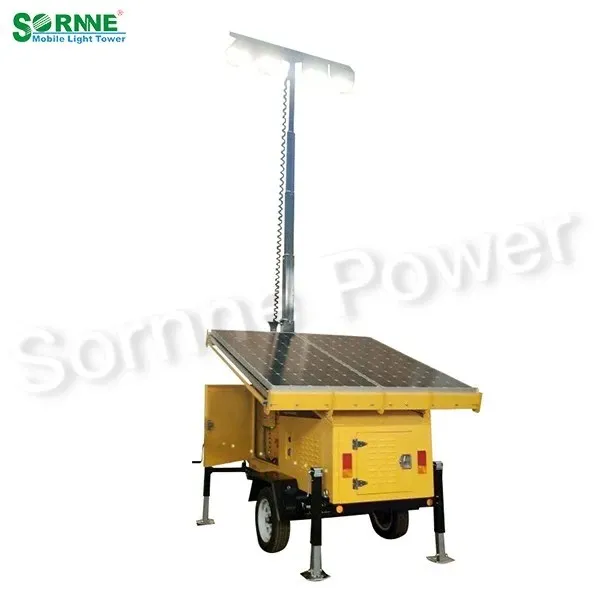
Construction Site Lighting: A Practical Guide for Contractors and Distributors
Construction site lighting covers more than the lamp beside the tool. It includes task light at the work front, wider area light over access routes, laydown yards and unloading points, and low-level visibility along walkways and boundaries. The balance shifts as the job moves from groundwork to fit-out, so the lighting has to be movable rather than fixed in place. Suoen manufactures mobile light towers whose listed applications include construction sites, and the sections below set out how to choose between the main equipment types.
Distributors and project buyers add their own questions about power source, transport and the packing that suits their market. Both groups meet at the same point: the lighting plan for the site, which decides how much equipment is needed and where it stands through the shift.
The sections that follow move from the general to the specific: what construction lighting must cover, how temporary lighting differs from installed lighting, how LED compares with older lamp types, how to choose a construction light tower, and when portable units are enough.
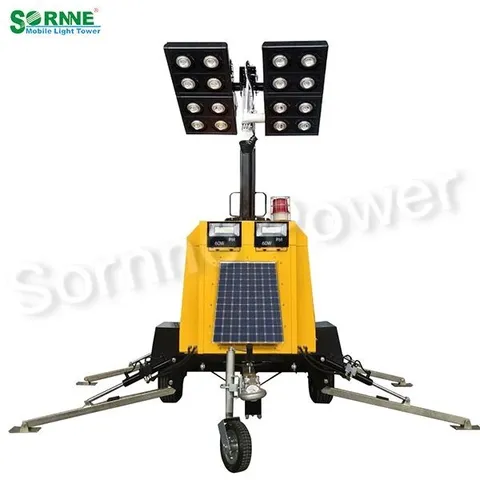
Yellow wheeled tower with small front solar panel 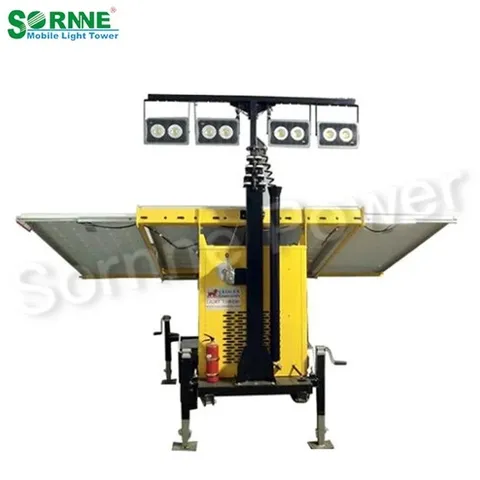
Yellow lighting unit with extended solar panel wings
What Construction Lighting Must Cover on Site
Construction lighting works in layers. A focused layer lights the crew’s immediate work, such as a form being fixed or a surface being finished. A broad layer covers plant movement and material handling, where an operator needs to see the ground and the load. A low-level layer keeps walkways, stair openings and the perimeter readable so people can move between the two without carrying a torch.
The mix changes with the stage of the site and with layout. Groundwork spreads light widely across open ground, structure work pulls it toward edges and levels, and fit-out pushes it into tighter spaces. This is why adjustable mast height and aimable heads matter on site lighting equipment: the same unit can serve different layers as the work front moves, instead of being tied to a fixed throw pattern.
Placement is part of the coverage. A mast standing inside a plant route is a collision risk and throws light across the site rather than onto the task; a mast set back and aimed inward gives more usable light with less glare for the people working under it.
Temporary Construction Lights and Temp Lighting for Construction
Temporary construction lights are equipment that arrives, is set up and is moved on again as the job progresses, rather than being wired into the building and left behind. Common forms include towed mast towers that follow the work around a large site, hand-push towers for tighter layouts, and smaller carried units for close work. Suoen manufactures mobile light towers for construction sites, and the choice between these forms follows from how often the light has to move.
Planning temp lighting for construction phases works better phase by phase than as a single fixed layout. Keep the lights movable, keep cable runs and mast bases out of plant routes, and revisit the plan when the work front shifts from groundwork to structure to fit-out. Noise-sensitive surroundings belong in that plan: engine-driven equipment and solar or battery equipment load a neighbourhood differently at night.
For sites where sound carries, Suoen lists portable light towers for noise-sensitive locations among its products. What a particular site needs, including the number of units, the power source and the standing positions, comes out of the site description and the proposal that follows it.
LED Construction Lights and LED Temp Construction Lights
On a job site, LED construction lights differ from conventional lamp types in ways that show up in daily use. LED light is directional, so the fixture can be aimed at the task instead of lighting everything around it. LED units start instantly without a warm-up period, which matters when a tower is switched on at dusk or moved between positions. They also need less attention to lamp replacement, which suits equipment that is set up and taken down repeatedly.
Suoen’s light tower range covers LED lighting as well as other lamp options, so a specification can be matched to the site rather than forced into a single type. The lamp type is part of a longer decision, alongside power source, mast type and the way the unit is moved.
Diffused balloon-style heads spread light and cut glare where crews work close to the fixture. Suoen builds LED balloon light towers and LED mobile light towers for these situations.
Choosing a Construction Light Tower
Choosing a construction light tower starts with the site, not the catalogue. Work out how much area must be lit and from what mast height, and whether the site has grid power or needs the tower to be self-sufficient. Then weigh the power source: solar where the unit stands in the open for long stretches, diesel or generator where a long night of high output is normal, battery or hybrid where noise and exhaust matter. Towing versus hand-push movement follows from ground conditions, and expected night-by-night runtime settles the sizing.
Suoen manufactures solar mobile lighting towers, diesel light towers, generator lighting towers and telescopic masts. The solar light tower and diesel light tower routes answer different site conditions, and a mast can carry lighting where a full tower is more than the position needs.
A workable selection usually comes from a short description of the site: ground conditions, the areas that need light, available power and how the unit will be moved. Suoen replies with a configuration proposal and a quotation, then confirms production, packing and shipping terms.
Portable Construction Lights and Builders Lights
Portable construction lights suit small crews, short-duration tasks, indoor or confined areas and positions a vehicle cannot reach. A towed tower earns its place on larger open areas where light has to come from height to cover the ground. The dividing line is reach and duration: if the work moves every few hours and a worker can carry the light, a portable unit is enough.
Suoen’s range includes portable mobile lighting towers and portable balloon light towers alongside trailer-mounted towers. A buyer whose requirement does not fit those forms can describe the site in the inquiry form and receive a configuration that matches it.
Builders lights are compact work lights that a worker can carry and set up quickly, commonly on a tripod or a small stand, and they are used for close work rather than area coverage. Suoen offers tripod and balloon style portable lighting options; model choice and MOQ are confirmed in the quotation.
Request a quotation
Describe your site, working hours and power situation, and we will suggest a light tower or mast.
Or write to sales@portablelighttower.com